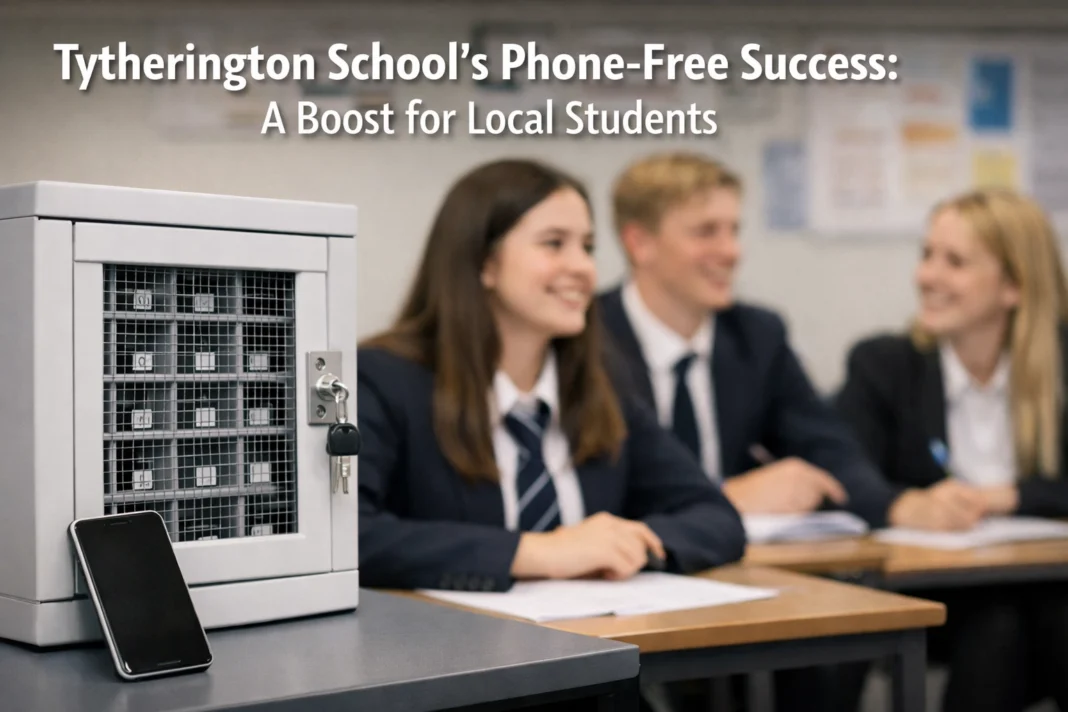

Tytherington School’s Phone-Free Success: A Boost for Local Students
There is a different kind of energy buzzing through the hallways of Tytherington School lately. If you walk past the classrooms or through the canteen during lunch hour, you might notice something that feels a bit like a throwback to a previous decade. There is more laughter, more eye contact, and a lot more actual conversation. The reason? A bold move that has turned the school into a “phone-free zone,” and the results are already making waves across Macclesfield and the wider Cheshire East area.
Since the start of the academic year in September 2025, Tytherington School has implemented a new policy aimed at reclaiming the school day for learning and socialising. By using a clever system involving lockable pouches, the school has effectively removed the distraction of smartphones from the daily lives of students in Years 7 through 11. While it might sound like a drastic measure to some, the local community is seeing the rewards in real-time.
A Fresh Approach to the School Day
The transition to a phone-free environment wasn’t about being “anti-tech.” Instead, it was about creating a sanctuary where students could focus on their studies and their friendships without the constant pings, buzzes, and notifications that define modern life. Being the first school in Cheshire East to take this specific path, Tytherington has set a high bar for how local institutions can handle the growing concerns surrounding screen time.
The system is straightforward but effective. Every morning, students place their mobile devices into a Yondr pouch. This is a secure, padded sleeve that locks with a magnetic seal. The students keep the pouch with them in their bags, so they still have possession of their phones for the journey to and from school, but they cannot access them during school hours. At the end of the day, they tap their pouch against a releasing base, and they are back online.

Immediate Gains in the Classroom
Headteacher Manny Botwe has been a vocal advocate for the change, and for good reason. The feedback from the teaching staff has been overwhelmingly positive. One of the most immediate impacts has been a significant boost in student concentration. Without the temptation to check a message under the desk or the anxiety of a missed social media update, students are finding it much easier to stay “in the zone.”
In the classroom, teachers have noted that the “settle-down” time at the start of lessons has vanished. Usually, it takes a few minutes to get everyone focused after a break, especially if students are still reeling from a digital interaction. Now, the transition into learning is seamless. This extra time might seem small, but over a school week, it adds up to hours of additional, high-quality instruction.
The academic focus isn’t just about better grades, though that is a likely outcome. It’s about the depth of engagement. When a student isn’t distracted, they can dive deeper into complex subjects, whether they are exploring the nuances of English literature or mastering a difficult mathematical theorem. Much like how actors might use specific secrets to award-winning performances to stay in character, these students are learning the value of deep, uninterrupted focus.
Bringing Back the Art of Conversation
Perhaps the most heartwarming success story of this policy is what is happening outside the classroom. During break times and lunch, the change is palpable. The “zombie walk”, where students move through corridors with their heads down, glued to their screens, has effectively disappeared.
In its place, the school has seen a resurgence of traditional playground activities. Students are talking to each other, playing sports, and engaging in clubs with renewed vigour. There’s a sense of community that is often lost when everyone is existing in their own digital bubble. By removing the digital barrier, the school has forced, and encouraged, students to build real-world social skills.
For many students, this has been a relief. The pressure to maintain a certain image on social media or to respond instantly to group chats can be exhausting. Having a guaranteed six-hour break from that digital noise every day has allowed many young people in Macclesfield to just be kids again.

A Win for Mental Health and Wellbeing
Beyond the grades and the playground games, there is a serious side to this success: student wellbeing. Safeguarding is a top priority for any school, and Tytherington has reported a measurable decrease in safeguarding concerns linked to mobile phones and social media.
Cyberbullying, inappropriate content, and the “FOMO” (fear of missing out) that social media facilitates often bleed into the school day, causing distress and friction between students. By making the school a phone-free space, these issues are kept at the gates. If a conflict does arise, it’s handled face-to-face, which often leads to quicker and more empathetic resolutions.
Students themselves have spoken about feeling less stressed. Without the constant comparison to the curated lives of others on Instagram or TikTok, there is more room for self-acceptance. The “notifications anxiety” that many of us feel is real, and for a teenager whose brain is still developing, the impact can be even more profound. Tytherington is proving that a break from the digital world is a powerful tool for mental clarity.
What Parents Are Saying
It’s not just the staff and students who are noticing the difference; the parents of Macclesfield are firmly on board. Many parents have expressed a sense of relief that the school has taken the lead on this issue. Dealing with screen time at home is a constant battle for many families, and knowing that their children are getting a “digital detox” for the majority of the day is a huge weight off their shoulders.
Some parents have even noted that the habit of less screen time is following the students home. Once they realise they can survive: and thrive: without a phone for six hours, the urge to spend the entire evening scrolling begins to fade. It’s a positive cycle that is improving family dynamics across the community.

Macclesfield Leading the Way
Tytherington School’s success is a shining example of how local leadership can solve modern problems. By taking a proactive stance, they haven’t just improved their own school; they’ve started a conversation across Cheshire and the rest of the UK. The school is now calling on the government to provide funding so that other schools can implement similar systems without dipping into their already stretched budgets.
As we look at the future of education, it’s clear that balancing technology with human interaction is going to be the key challenge. While we often hear about the latest gadgets and tech news, sometimes the most “advanced” thing we can do for our children is to give them the space to be human.
For those interested in how our community is evolving, you can check out more stories in our Community category. We are committed to highlighting the positive steps being taken right here in our backyard.
A Hopeful Future
The success at Tytherington School is a reminder that change, even when it seems difficult at first, can lead to incredible outcomes. The students of Macclesfield are proving that they don’t need a screen in their hand to be connected; they just need the opportunity to talk, listen, and learn together.
As the school year progresses, we expect to see even more positive data coming out of Tytherington. For now, we can all take a leaf out of their book: sometimes, to really connect, you have to disconnect first. It’s a simple lesson, but one that is making a world of difference for the next generation of Maxonians.
If you’re looking for more local news and updates on what’s happening in our town, be sure to browse through our latest posts. There is so much good happening in Macclesfield, and we are here to celebrate every bit of it. From the local schools to our thriving high street, the spirit of our community has never been stronger.

Tytherington School has shown us that with a bit of courage and a clear vision, we can create environments where our young people can truly flourish. Here’s to many more phone-free successes in the future!