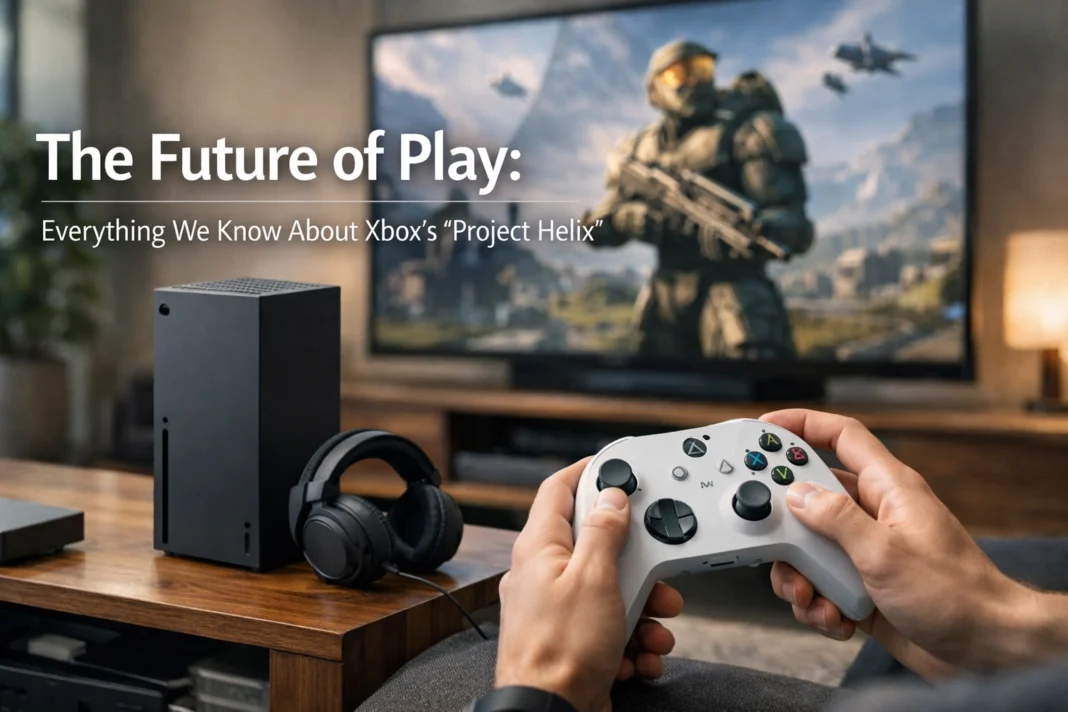

The Future of Play: Everything We Know About Xbox’s ‘Project Helix’
If you’ve been following the buzz coming out of the Game Developers Conference (GDC) this week, you know the atmosphere is electric. While there are always plenty of whispers about new engines and indie darlings, one name has been on everyone’s lips: “Project Helix.”
Microsoft has finally pulled back the curtain: just a little: on what they believe is the future of the Xbox brand. It’s not just another console refresh; it’s a fundamental shift in how we think about gaming hardware. Project Helix represents the long-awaited marriage between the high-end power of a gaming PC and the plug-and-play simplicity of an Xbox console. At The Maxonian, we’re all about the best in entertainment, and this news is about as big as it gets.
The Hybrid Dream Becomes Reality
For years, gamers have had to choose. Do you want the raw power, customizability, and massive library of a PC? Or do you want the convenience of sitting on your sofa, hitting a button, and being in a game within seconds? Microsoft’s Project Helix aims to end that dilemma by creating a true hybrid device.
Under the hood, Helix is powered by a custom AMD system-on-chip (SoC) that utilizes the brand-new RDNA 5 GPU architecture. But the real magic isn’t just in the raw numbers; it’s in the flexibility. Helix is designed to run both traditional Xbox console games and native Windows PC games seamlessly.
Imagine having access to your entire Steam or Epic Games library right alongside your Xbox Game Pass titles, all on a single box under your TV. This isn’t just about streaming or “cloud gaming”: this is local hardware running PC code. It’s a bold move that could potentially unify the two biggest ecosystems in gaming.

Under the Hood: A Generational Leap
The technical specs being discussed at GDC are, frankly, staggering. The partnership between Microsoft and AMD has resulted in a chip that focuses heavily on next-generation ray tracing. We’re not just talking about shiny floors and better shadows; we’re talking about “path tracing,” a technique that simulates the physical behavior of light with incredible accuracy.
The goal for Project Helix is to deliver a leap in ray tracing performance that is an order of magnitude beyond what the Xbox Series X can handle. To achieve this without the console becoming a jet engine in your living room, Microsoft is leaning heavily into AI.
The Helix hardware features a dedicated neural rendering processing unit. This little slice of silicon is designed to handle the heavy lifting of AI-powered graphics. It works in tandem with a new technology called AMD FSR “Diamond.”
FSR Diamond: The Secret Sauce
If you’re a tech enthusiast, you’ve likely heard of upscaling technologies like DLSS or the current versions of FSR. They allow a game to render at a lower resolution and then use smart algorithms to make it look like 4K, saving a massive amount of processing power.
FSR Diamond is the next evolution of this, and it’s being built directly into the Project Helix SDK. It combines ML-based upscaling with something called “ray regeneration.” Essentially, instead of the GPU having to calculate every single ray of light (which is incredibly taxing), the AI “imagines” the missing data based on previous frames.
The result? Games that look like they’re running on a £3,000 enthusiast PC, but running on a console that fits in your media center. It also includes multi-frame generation to ensure that even the most demanding titles feel buttery smooth at high frame rates.
Xbox Mode and the Windows 11 Connection
One of the coolest “insider” details to emerge from GDC is how Microsoft plans to handle the software side of this hybrid beast. We’ve learned that starting in April, Windows 11 will begin rolling out a dedicated “Xbox Mode.”
This isn’t just a skin or a fancy launcher. Xbox Mode is a deep-level integration that limits background processes, cuts out telemetry bloat, and dedicates the lion’s share of system resources to the game you’re currently playing. For Project Helix, this means that when you boot a PC game, the OS behaves exactly like a console OS: fast, lean, and focused.
For those who enjoy the “tinkering” aspect of PC gaming, don’t worry. The reports suggest that Helix will still allow for that deeper level of control if you want it, but for the average player, the experience will be as simple as picking up a controller. This is all part of the “Xbox Play Anywhere” philosophy, ensuring that your saves, achievements, and friends follow you regardless of whether you’re on a laptop, a desktop, or the Helix console.

Why Developers are Excited
It’s easy to focus on what this means for us as players, but the excitement among developers at GDC was even more palpable. Currently, studios often have to build two separate versions of their games: one for PC and one for consoles. Even though the current-gen consoles use PC-like architecture, the optimization process is still a massive undertaking.
Project Helix changes the game by allowing developers to create a single build that targets both Windows and the Helix hardware. It’s similar to how games are optimized for the Steam Deck, but on a much more powerful scale. By using “work graphs”: a feature where the GPU can drive its own code execution without waiting for the CPU: developers can squeeze every last drop of performance out of the hardware.
This unified approach means faster development cycles and fewer “bad ports.” It also opens the door for smaller indie developers to bring their PC-centric titles to the living room without the high cost of a dedicated console port.
The Path to 2027
While the hype is real, we still have a bit of a wait ahead of us. Microsoft plans to ship alpha versions of the hardware developer kits to studios in early 2027. This gives developers plenty of time to get their hands dirty with the RDNA 5 architecture and FSR Diamond before the console hits store shelves.
This multi-year engineering partnership with AMD suggests that Helix isn’t just a one-off release. It’s the foundation of a new era. Microsoft is looking at the long game, building a platform that can evolve alongside PC hardware rather than being stuck in a rigid five-to-seven-year console cycle.
What This Means for the Entertainment Landscape
At The Maxonian, we love seeing how technology pushes the boundaries of storytelling and immersion. Whether it’s debunking movie myths or looking at how actors achieve award-winning performances, the common thread is the pursuit of a better experience.
Project Helix is the gaming equivalent of that pursuit. By removing the barriers between PC and console, Microsoft is making high-end gaming more accessible to everyone. You won’t need a degree in computer science to enjoy the latest ray-traced blockbusters; you’ll just need a comfortable sofa and a Helix controller.

Closing Thoughts
Project Helix is more than just a new Xbox; it’s a statement of intent. It says that the “console wars” as we know them: defined by proprietary boxes and locked ecosystems: are changing. The future is about the games themselves and giving players the freedom to play them wherever and however they want, without compromising on quality.
The road to 2027 feels a little long right now, but if the tech demos at GDC are anything to go by, the wait will be more than worth it. We’ll be keeping a close eye on any more leaks or official announcements, so make sure to check back with us here at The Maxonian for all your tech and entertainment updates.
For now, the message is clear: the future of play isn’t just a console, and it isn’t just a PC. It’s both. And it’s going to be spectacular.